The Challenger
Pushes you to grow beyond comfort
The Challenger calls you forward. They don’t confront you to break you down: they challenge you because they believe in you. They see your potential long before you see it yourself. Their honesty is never sharp for the sake of being sharp; it’s loving, steady, and rooted in care.
A Challenger helps you cross the invisible line between potential and action. They don’t let fear, self-doubt, or comfort decide how far you’ll go. Their presence reminds you that growth often begins the moment you stop waiting to feel ready.

Fig. 1 — The Challenger archetype, visualised in oil.
contents
at a glance · villager iii
Calcar amicum, the friendly spur
You may need a Challenger when…
- You’ve grown comfortable but restless.
- You know what you want but hesitate to act.
- You’re capable but still waiting for the “right moment.”
- You need someone to remind you what you’re made of.
A Challenger helps you break through hesitation. They transform “maybe later” into “let’s begin.”
Roles they might play
Anyone who calls you out with kindness and reminds you that you can do hard things.
chapter i
Field notes on the Challenger
their character
Why they matter
“They see the brave version of you, and wait for you to catch up.”
Where a Compass helps you find your direction, a Challenger makes sure you actually move. They remind you that strength isn’t built in safety, but in motion. Through their words, sometimes direct, sometimes quiet, they nudge you toward the edge of your comfort zone and hold you there just long enough for you to realise you can stand on your own.
They are the ones who refuse to let you shrink. When you say, “Maybe someday,” they say, “Why not now?” When you underestimate yourself, they lend you their belief until you find your own.
in the wild
Recognising them
Challengers have a calm kind of intensity: they don’t need to shout to be heard. They speak with conviction, not to win, but to awaken. You might recognise them as the friend or mentor who looks you in the eye and names the excuse you’ve been hiding behind: kindly, but without letting you off the hook.
They ask the questions that make you sit up straighter. They see strength in you when you’re busy hiding it. Their words might challenge you, but their belief makes you feel safe enough to listen.
chapter ii
Working with a Challenger
With a Challenger, you move from doubting what’s in you to finding out it was there all along.
Growth with a Challenger happens through honesty, accountability, and encouragement. They don’t give you easy praise: they tell you what you’re capable of, and hold you to it.
You can turn to a Challenger when you feel stuck behind fear, perfectionism, or overthinking. Tell them what you’re hesitating about, and let them help you see the difference between not ready and afraid.
Good Challengers rarely push uninvited. To invite a Challenger into your village, ask for honesty, not comfort, and trust them to deliver it with care.
To open the conversation
- “I know I’ve been holding back. Would you tell me honestly where you think I’m playing small?”
- “You’re always so direct, and I trust you. Can you help me see what I’m avoiding?”
- “I need a little push. What’s one step you think I’m ready for?”
Questions to bring
- “What do you see in me that I’m not owning yet?”
- “Where am I settling for less than I’m capable of?”
- “What fear do you think is keeping me still?”
- “What’s the next brave step I could take right now?”
These conversations give your Challenger permission to push. They turn belief into action, and action into growth.
chapter iii
Reflective questions
On your way to finding a Challenger, take a moment with these questions. They help you recognise the right person, and bring them the right question.
- Where in my life am I choosing comfort over courage?
- Who believes in me enough to challenge me when I hesitate?
- How do I react when someone pushes me toward my potential?
- What would I do now if I trusted I could handle it?
chapter iv
Tending the relationship
Finding your villager and inviting them in is only the beginning. A village stays alive through rhythm and care: staying in touch, letting people know what their support made possible, and noticing when the relationship needs something different.
Keeping it warm
a good rhythm
Bring them in before the brave step, so they can push you, and report back after it. A Challenger needs to see the follow-through.
keeping it warm
Celebrate the wins with them, and tell them when a push landed well, or when it didn’t.
giving back
Cheer them on in their own challenges. Even Challengers need someone in their corner.
watch out for
Where this kind of support can quietly go wrong, on their side or on yours.
Their edge instead of yours
A Challenger should push you towards your potential, not the ambition they would have in your place. If their challenges keep pointing somewhere that doesn’t feel like you, check in with your Compass.
Mistaking harshness for honesty
Directness without care isn’t challenge. It’s just hard. If you leave feeling smaller instead of braver, something’s off.
A push at the wrong moment
Pressure on an empty tank isn’t courage. It’s a shortcut to burnout. A Challenger works best alongside a Firekeeper.
Outsourcing your courage
If you only move when someone pushes, the Challenger has become your engine instead of your spark.
When you outgrow them
Outgrowing a villager doesn’t mean ending the relationship. Usually it’s the sign that it worked. Your need has changed, so the role they play for you can change too.
Notice the signs
- You start asking yourself “Why not now?” before they do.
- Their challenges land as things you’d already decided.
- Brave steps have become a habit. The fear is still there, but it’s no longer in charge.
- You can tell “not ready” from “afraid” on your own.
Their role might change
 The Fellow TravellerYou can challenge each other, as equals.
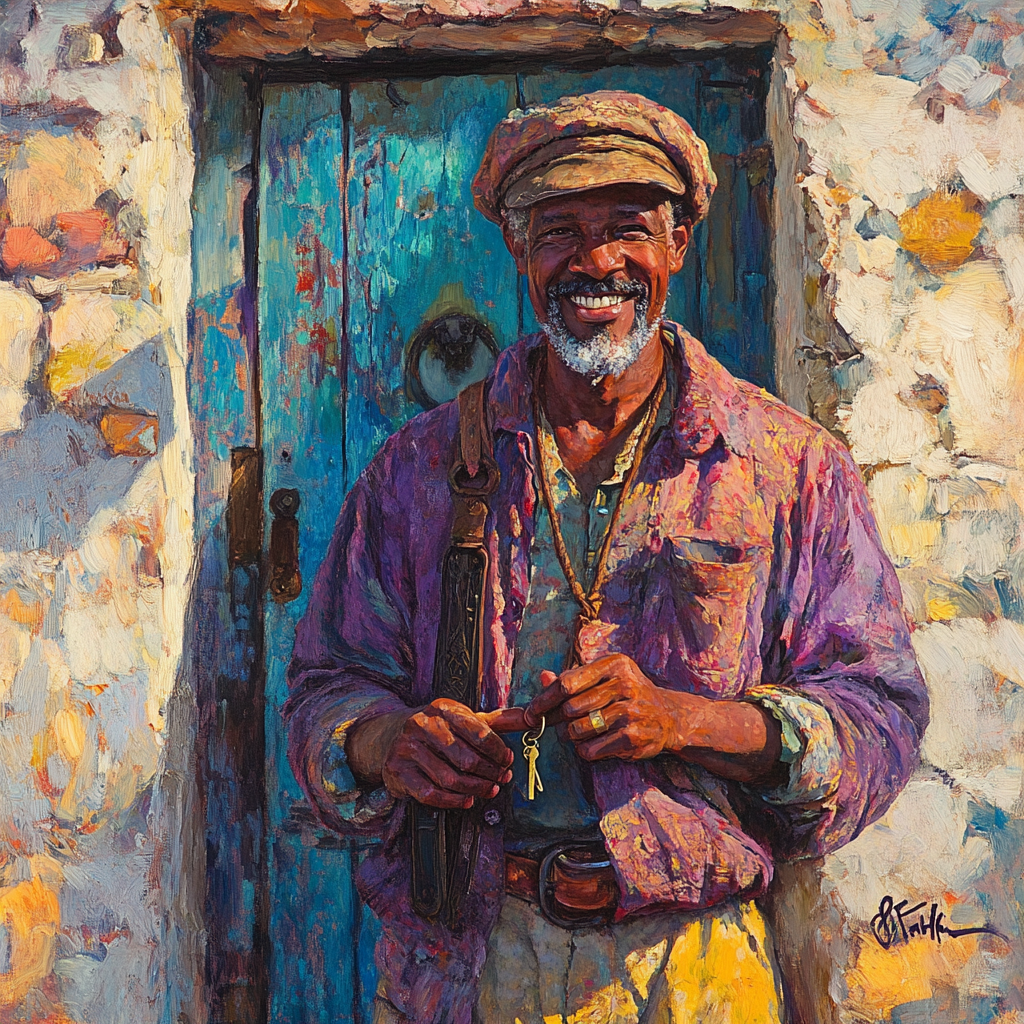 The Key HolderThey’ve watched you act, so they can vouch for you.
Or any other villager that fits their personality.
Have the conversation
“You pushed me when I needed it most, and I’ve started pushing myself. I’d love to hear what you’re working on. Maybe we can keep each other honest.”
“You’ve seen me take some big steps lately. Would you be open to putting my name forward when the right opportunity comes up?”
a note on use
Free to use, when credited
The Challenger is one of the villagers of The Village. Use it for your own growth, or with the people you mentor or manage. Coaches, including career coaches, are welcome to use it in their own practice. All I ask is that you credit me as its creator, so others can find the original.
The Village is licensed under CC BY-SA 4.0. Use without credit falls outside this licence, and in that case I reserve the right to charge a fee.
also
Beyond the page
The Village is made to be used without me: everything you need is in this guide. Still, if you’d like to explore it together with your team or audience, I love doing that in person.
My agenda is quite full, but when it allows, I’m open to discussing a professional engagement: a work session with a team or smaller group, or a talk for a larger group.