In July 2020, I was invited to join a live YouTube session by Follow Your Dreams, an initiative by the Municipality of The Hague that helps young people between 18 and 30 discover their talents, build confidence, and explore meaningful career paths. The programme connects participants with mentors and organizations, offering them workshops, training sessions, and projects that help them find where they truly belong.
The live event brought together several people with unique stories, and I was one of the guests they called in to share mine. I joined from home, sitting on the floor with my phone propped up, surrounded by the slight chaos that always comes with going live, trying to fix lighting, sound, and connection just moments before everything starts.
Archive Info
Title: FYD [Follow Your Dreams] Live Stream
Date: 09 July 2020
Organizer: Follow Your Dreams (FYD)
Direct Link: Youtube FYD
About This Archive
Welcome to my Media Archive. In this curated collection, I explore the media appearances and interviews that have marked my journey through technology and beyond. This archive is not just a record of professional milestones; it is a personal journey through moments that have defined and shaped my public persona.
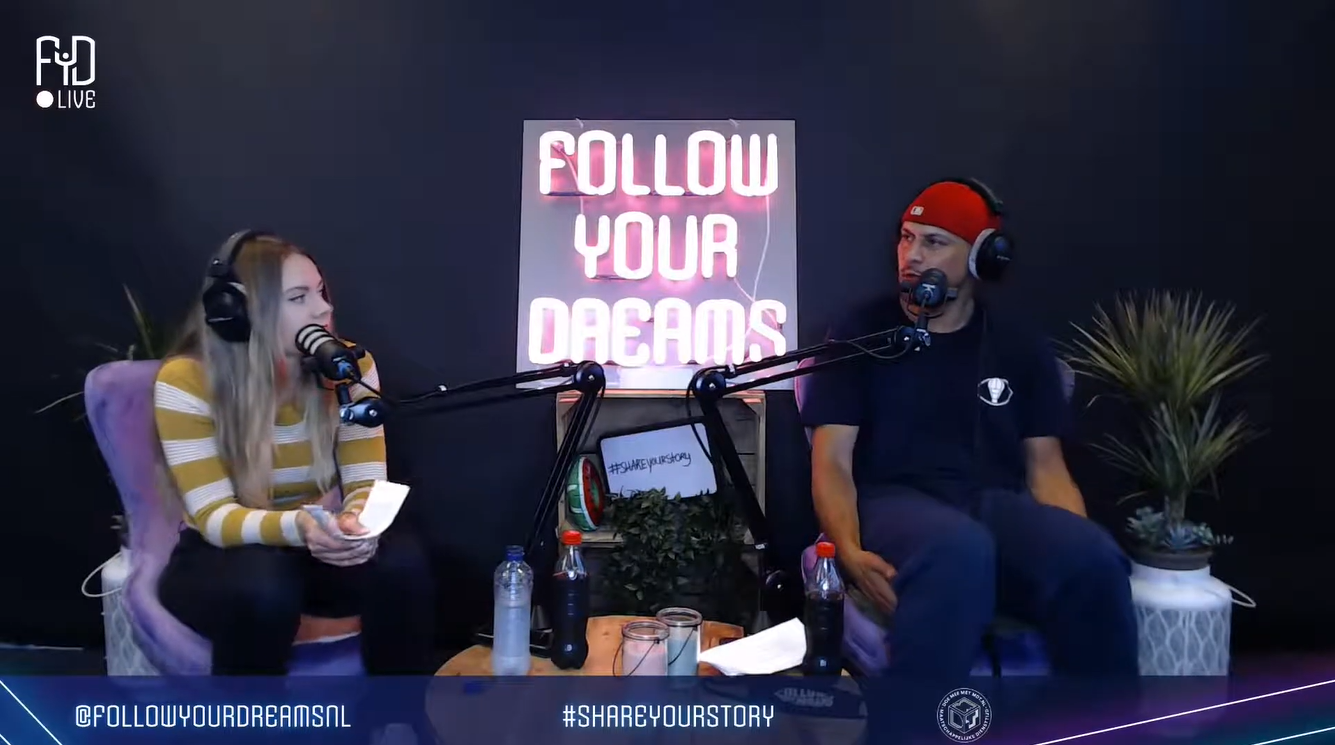
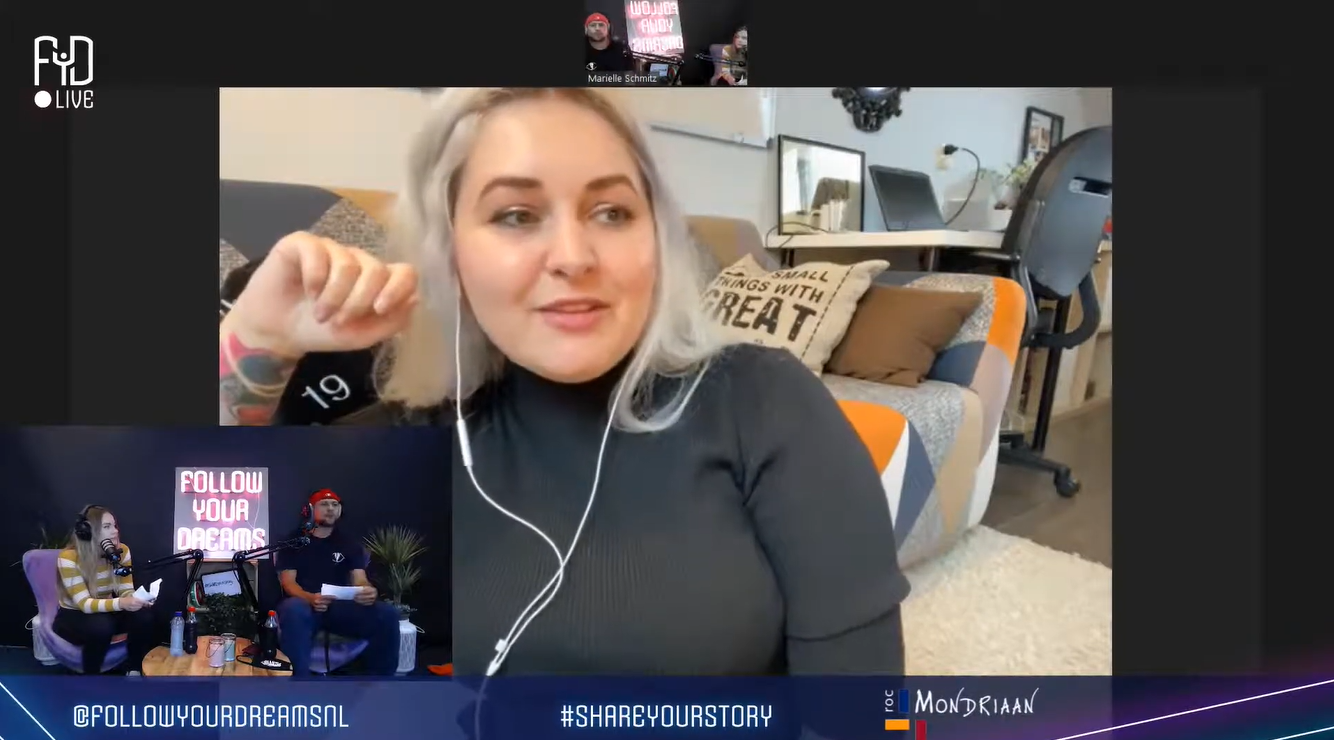
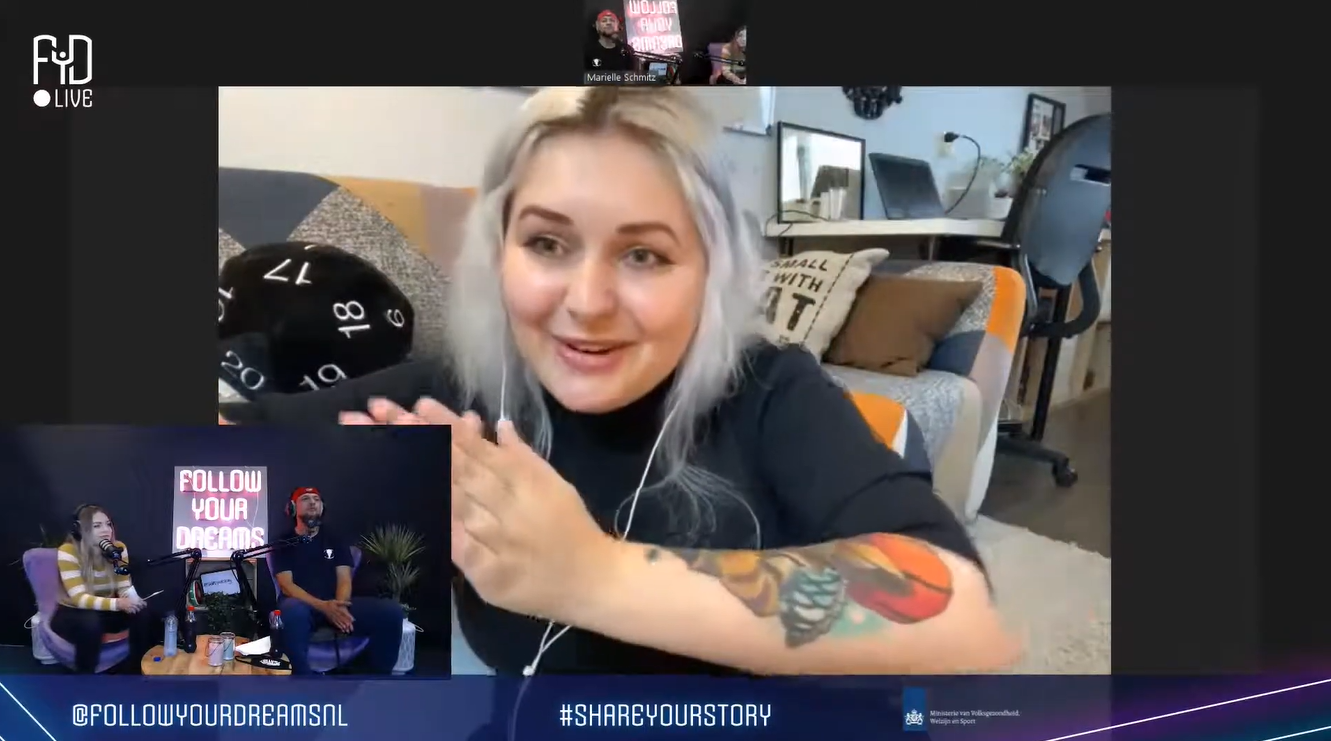
We talked about my journey: the studies I’ve followed, my work in technology and game development, and the path that led me to start my own company. The questions touched on ambition, resilience, and what it means to be a woman in tech, where curiosity and stereotypes still often collide. It was a casual, open conversation, and one of the most honest I’ve ever had in front of a camera.
What I loved most was how real it felt. There was no script, no need to perform, just space to speak. I shared the parts of my story that don’t always make it into interviews, the studies I never finished, the choices that didn’t work out, and how each of those experiences still taught me something valuable.
And when I look back at that video now, I can’t help but smile. It might be one of my most neurodiverse interviews ever. I’m sitting on the floor (which, as many neurodivergent people know, is practically a comfort zone), fidgeting constantly, switching topics with enthusiasm, and talking about my broad mix of studies, interests, and that deep instinct to follow my own path. It’s messy, authentic, and unmistakably me.
Being in the media can sometimes trigger a kind of quiet impostor syndrome. You start wondering, Who am I to be here? But when I watch that video, I don’t feel that. I see someone who’s not trying to be perfect, just real. I think that’s exactly why people invite me to speak, not because I have everything figured out, but because I’m not afraid to admit that I don’t.
Authenticity resonates. When you dare to speak from that place, the one that includes the uncertainty, the imperfection, and the humanness of it all, people recognize themselves in it. And that, more than anything, is what makes conversations like these so meaningful.
Interview Summary
Interview Samenvatting (Dutch)
Samenvatting van het Follow Your Dreams-interview (9 juli 2020)
[Bij gebrek aan een correct transcript]
Tijdens de YouTube Live van Follow Your Dreams werd Juliette geïnterviewd over haar studieloopbaan, haar startups en de manier waarop ze haar dromen probeert te verwezenlijken. Het gesprek vond plaats in een open, spontane sfeer, en gaf een eerlijk en realistisch beeld van hoe je op je eigen manier een pad kunt uitstippelen dat niet altijd binnen de gebruikelijke lijnen past.
Introductie en achtergrond
Juliette stelde zichzelf voor als iemand met een brede interesse en een achtergrond in verschillende studies. Ze vertelde over haar werk aan een educatieve game die natuurkunde op een toegankelijke manier wil onderwijzen aan middelbare scholieren. Ze beschreef zichzelf als iemand die altijd bezig is, met veel projecten tegelijk, maar vooral gedreven door nieuwsgierigheid.
Over dromen en ambities
Toen haar gevraagd werd wat haar droom is, vertelde ze dat ze er eigenlijk meer dan één heeft. Haar huidige droom is dat haar startup verder groeit en uiteindelijk een gevestigde naam wordt in educatieve technologie — vooral binnen STEM (Science, Technology, Engineering, Mathematics). Op de lange termijn ziet ze zichzelf ook werken in onderzoek, bijvoorbeeld rond technologie of innovatie in onderwijs.
Jeugd en interesse in techniek
Ze vertelde dat haar liefde voor techniek van jongs af aan is ontstaan. Haar vader en grootvader waren allebei technisch ingesteld en namen haar daar al vroeg in mee. Ze hielp haar vader soms met sleutelen aan auto’s en begon rond haar twaalfde met programmeren. Wat later, rond haar veertiende, raakte ze dat spoor even kwijt en dacht ze dat techniek “niets voor meisjes” was. Ze wilde toen iets met mode gaan doen, maar op haar zeventiende kwam ze gelukkig weer terug bij ICT. Sindsdien wist ze dat ze daar thuishoorde.
Vrouw zijn in de techniek
Er werd gesproken over hoe het is om als vrouw te werken in een mannenwereld. Juliette vertelde dat ze dat van jongs af aan gewend was: op de middelbare school had ze een technisch profiel waar ze bijna het enige meisje was. Op het hbo merkte ze dat ze meer geaccepteerd werd als ze minder vrouwelijk overkwam — bijvoorbeeld toen ze haar bril droeg, hoodies aantrok en haar uiterlijk wat “neutraal” hield. Zodra ze zich vrouwelijker kleedde, met make-up of jurkjes, merkte ze dat mensen haar technische kennis eerder in twijfel trokken. Ze vertelde dit met humor, maar ook met realisme: er bestaan nog steeds vooroordelen, al ziet ze dat langzaam veranderen.
Over studeren en ondernemen
Juliette vertelde dat ze veel verschillende studies heeft gevolgd, en hoe dat allemaal tot stand kwam. Ze begon op het hbo met Game Development en ICT, maar stapte na haar propedeuse over naar de universiteit toen de regels voor studiefinanciering veranderden. Ze koos voor Korean Studies in Leiden, deels uit interesse in de Koreaanse game-industrie. Daarna volgde ze ook Security Studies en andere vakgebieden die haar interesseerden.
Toen haar gevraagd werd hoe ze al die verschillende richtingen combineert, vertelde ze dat ze vooral wil blijven leren en dat haar pad niet lineair is. Ze gaf aan dat ze geen van die studies uit ambitie of status deed, maar puur uit interesse. Uiteindelijk wil ze graag promoveren (PhD) op een onderwerp binnen cyber security of internationaal beleid, gecombineerd met haar liefde voor educatie en innovatie.
Over IQ, doorzettingsvermogen en mislukkingen
Er werd luchtig gesproken over intelligentie en hoe mensen vaak aannemen dat succes alleen komt door “slim zijn”. Juliette zei dat dat niet klopt. Volgens haar draait succes vooral om doorzettingsvermogen. Ze vertelde dat ze veel heeft meegemaakt, dat niet alles vanzelf ging, en dat ze juist daardoor heeft geleerd om telkens opnieuw op te staan. Slim zijn helpt, zei ze, maar wat je echt vooruitbrengt, is blijven doorgaan — ook na tegenslagen.
Persoonlijke obstakels
Juliette sprak open over moeilijke periodes in haar leven, zoals pesten op jonge leeftijd en later familieproblemen. Ze vertelde dat ze zich vroeger vaak anders voelde, wat haar sociaal onzeker maakte. Studie en werk werden toen haar manier om kracht en richting te vinden. Later leerde ze dat sommige dingen, zoals familie en gezondheid, altijd prioriteit hebben. Ze stopte tijdelijk met sommige studies toen het thuis moeilijk ging en zei daar eerlijk over: “En dat is prima. Soms moet je kiezen voor wat belangrijk is.”
Balans tussen studie en werk
Ze gaf advies aan jongeren die studie en werk willen combineren. Volgens haar kan er vaak meer dan je denkt, zolang je de regels kent en met een goed plan naar je begeleiders stapt. Ze vertelde dat ze soms vakken volgde uit deeltijdprogramma’s om die met werk te kunnen combineren, en dat veel instellingen bereid zijn mee te denken als je zelf initiatief neemt.
Over leren, werken en toekomst
Toen haar werd gevraagd te kiezen tussen studeren of werken, zei ze dat ze persoonlijk meer voldoening haalt uit leren, omdat ze kennis opdoen echt leuk vindt. Toch benadrukte ze dat werkervaring net zo waardevol kan zijn. Zelf volgt ze naast haar werk ook veel online cursussen, vaak gratis of tegen lage kosten, omdat ze graag blijft groeien.
Ze vertelde dat haar cv soms wat “chaotisch” lijkt — zes studies, drie bedrijven — maar dat er juist een duidelijke lijn in zit. Alles wat ze doet, sluit aan bij twee kernthema’s: technologie en onderwijs. Haar keuzes lijken voor buitenstaanders misschien wispelturig, maar voor haar vormen ze samen een doordachte route.
Afsluiting van het gesprek
De presentatoren prezen haar doorzettingsvermogen, haar zelfvertrouwen en haar vermogen om haar eigen pad te volgen. Ze zeiden dat ze een inspirerend voorbeeld is van iemand die niet bang is om af te wijken van de gebaande paden en tóch richting weet te houden.
Juliette sloot af met een nuchtere en optimistische blik. Ze benadrukte dat iedereen fouten maakt en dat succes niet in perfectie zit, maar in eerlijkheid en groei. Voor haar gaat “je droom volgen” niet over grootsheid, maar over trouw blijven aan jezelf, stap voor stap.
Interview Summary (English)
Recap of the Follow Your Dreams Interview (July 9, 2020)
[Lacking a proper transcript]
During the Follow Your Dreams YouTube Live, Juliette was interviewed about her studies, her startups, and the way she has learned to shape her own path — one that doesn’t always follow the expected route. The conversation was open, genuine, and full of small reflections about ambition, resilience, and self-acceptance.
Introduction and background
Juliette introduced herself as someone with a wide range of interests and a background across several academic fields. She spoke about her startup and how her team was developing an educational game that teaches physics in a more intuitive way. She described herself as someone who always has many projects going at once, driven mostly by curiosity and the desire to create.
On dreams and ambitions
When asked about her dream, Juliette said she has many. Her current focus is on growing her company and eventually becoming a recognized name in educational technology, particularly within STEM (Science, Technology, Engineering, and Mathematics). In the long term, she would love to do more research — perhaps a PhD — and work on innovation in education and technology.
Early interest in technology
Juliette shared how her love for technology began in childhood. Her father and grandfather were both technically minded and often involved her in what they were doing. She used to help her father fix cars, and around the age of twelve she began programming. A few years later, she temporarily lost touch with that interest, thinking that “tech wasn’t for girls,” and turned toward fashion instead. But at seventeen she found her way back to ICT, realizing that technology was where she truly belonged.
Being a woman in tech
The interview also touched on what it’s like to be a woman in a male-dominated field. Juliette explained that she was used to being the only girl — even in high school, where she chose a double technical profile. At university, she noticed that people tended to accept her more easily when she looked less “feminine.” When she dressed casually, in hoodies or glasses, she blended in; but when she wore makeup or something more elegant, her technical knowledge was questioned more quickly. She shared this with humor and calm realism, saying that these stereotypes still exist, though the culture is slowly changing.
On studying and entrepreneurship
Juliette spoke about the many studies she has followed and how each choice was made. She started with Game Development and ICT at a university of applied sciences but transferred to Leiden University after earning her first-year diploma when the student finance system changed. There she began Korean Studies, partly because of her interest in the Korean gaming industry, and later added Security Studies and other disciplines that fascinated her.
When asked how she manages to combine so many directions, she explained that her motivation has always been learning itself. Her academic path isn’t linear, and that’s exactly what she likes about it. Eventually, she hopes to pursue a PhD in something that combines her passions — cybersecurity, global policy, education, and innovation.
On IQ, perseverance, and failure
The conversation also explored the idea of intelligence. Juliette said that people often assume she achieves things easily because she’s “smart,” but she doesn’t see it that way. “Success,” she explained, “has far more to do with persistence than IQ.” She talked about setbacks and difficult periods in her life and how learning to keep going was what really made the difference. Intelligence might open doors, but perseverance is what carries you through them.
Personal challenges
Juliette spoke openly about personal struggles, including being bullied when she was younger and dealing with family challenges later in life. Feeling “different” as a child gave her social anxiety, and she often turned to study and work for comfort and direction. Over time she learned that family always comes first and that it’s okay to pause when life demands it. She stopped some of her studies when things became difficult at home, and said calmly, “That’s fine. Sometimes you have to choose what truly matters.”
Balancing study and work
She offered practical advice for students who want to combine education and entrepreneurship. There’s often more flexibility than people realize, she said — you just need to understand the rules and approach your mentors with a plan. She shared examples of following evening classes to make her schedule work and encouraged others to be proactive, not to wait for someone else to solve it for them.
On learning, working, and the future
When asked to choose between study or work, Juliette said she personally finds the most joy in learning, but emphasized that work experience can be just as valuable. She enjoys taking online courses — many free or low-cost — simply because she loves exploring new ideas.
She also spoke about how her CV might look “chaotic” to outsiders — six different studies, three companies — but to her, it all follows a clear line. Everything connects to her two main themes: technology and education. To someone else it might look scattered, but for her it’s intentional, each step part of a bigger plan.
Closing thoughts
The hosts praised her determination, self-awareness, and confidence to walk her own path, even when it diverges from what others expect. They said she was an inspiring example of how following your dreams doesn’t always mean following a straight line.
Juliette closed with her characteristic calmness and warmth. She reminded viewers that everyone makes mistakes and that success doesn’t come from perfection, but from honesty and growth. For her, “following your dreams” isn’t about chasing greatness — it’s about staying true to yourself, one step at a time.