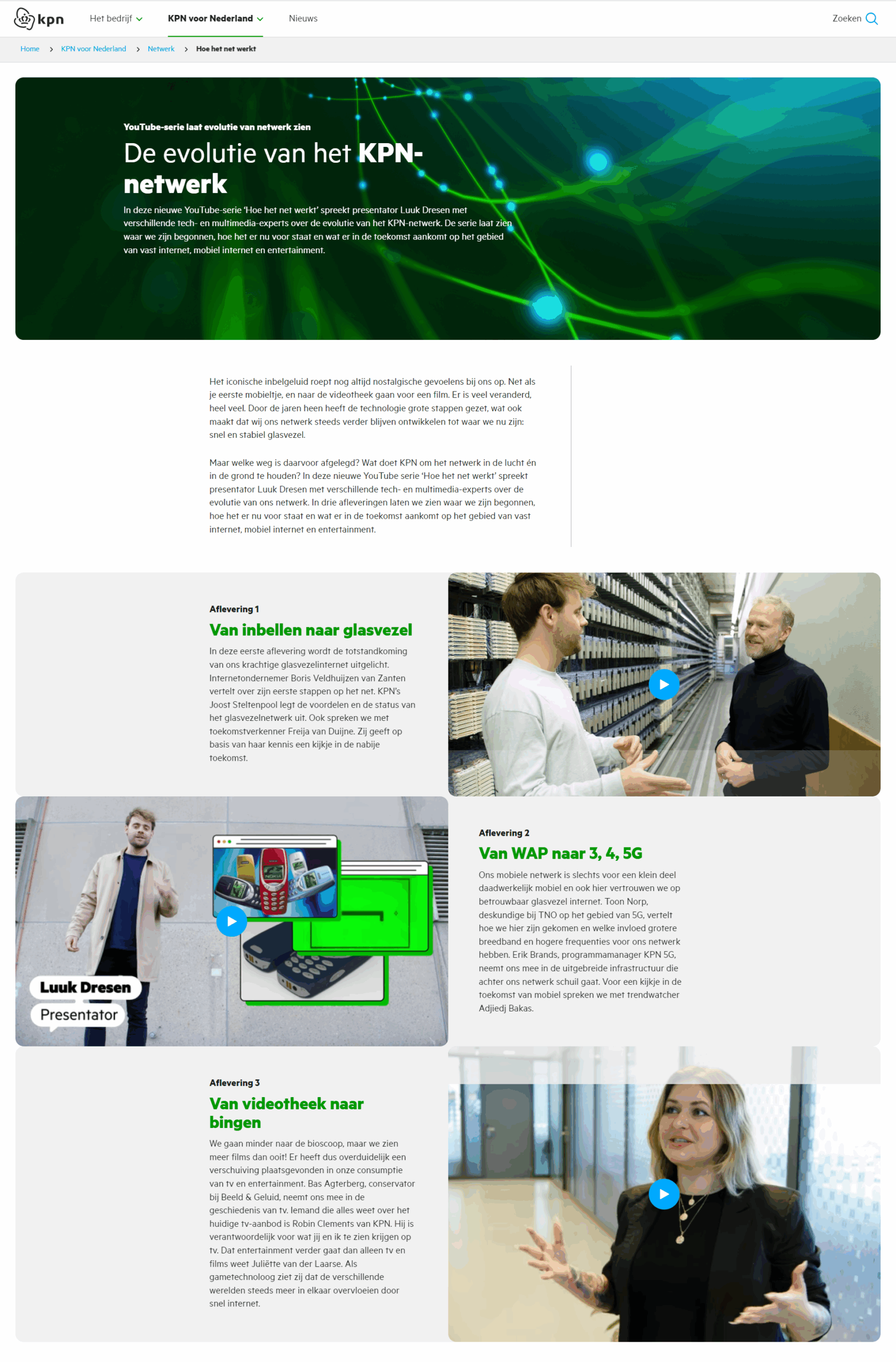
In early March 2022, I received an email from editor Dienke Vos, who was working on a new KPN series called How the Internet Works. She had found me through Wilke Martens, who had interviewed me years earlier for OneWorld. The concept immediately caught my attention. The series explored how the internet and mobile networks have evolved over time, and how technology continues to shape the way we live, communicate, and create. It sounded like something both educational and fun to be part of, especially because they wanted to include voices from different corners of the tech world.
Archive Info
Title: Hoe Het Net Werkt (How The Net Works)
Publication Date: 21 March 2022
Publisher: KPN
Direct Link: Hoe Het Net Werkt
About This Archive
Welcome to my Media Archive. In this curated collection, I explore the media appearances and interviews that have marked my journey through technology and beyond. This archive is not just a record of professional milestones; it is a personal journey through moments that have defined and shaped my public persona.
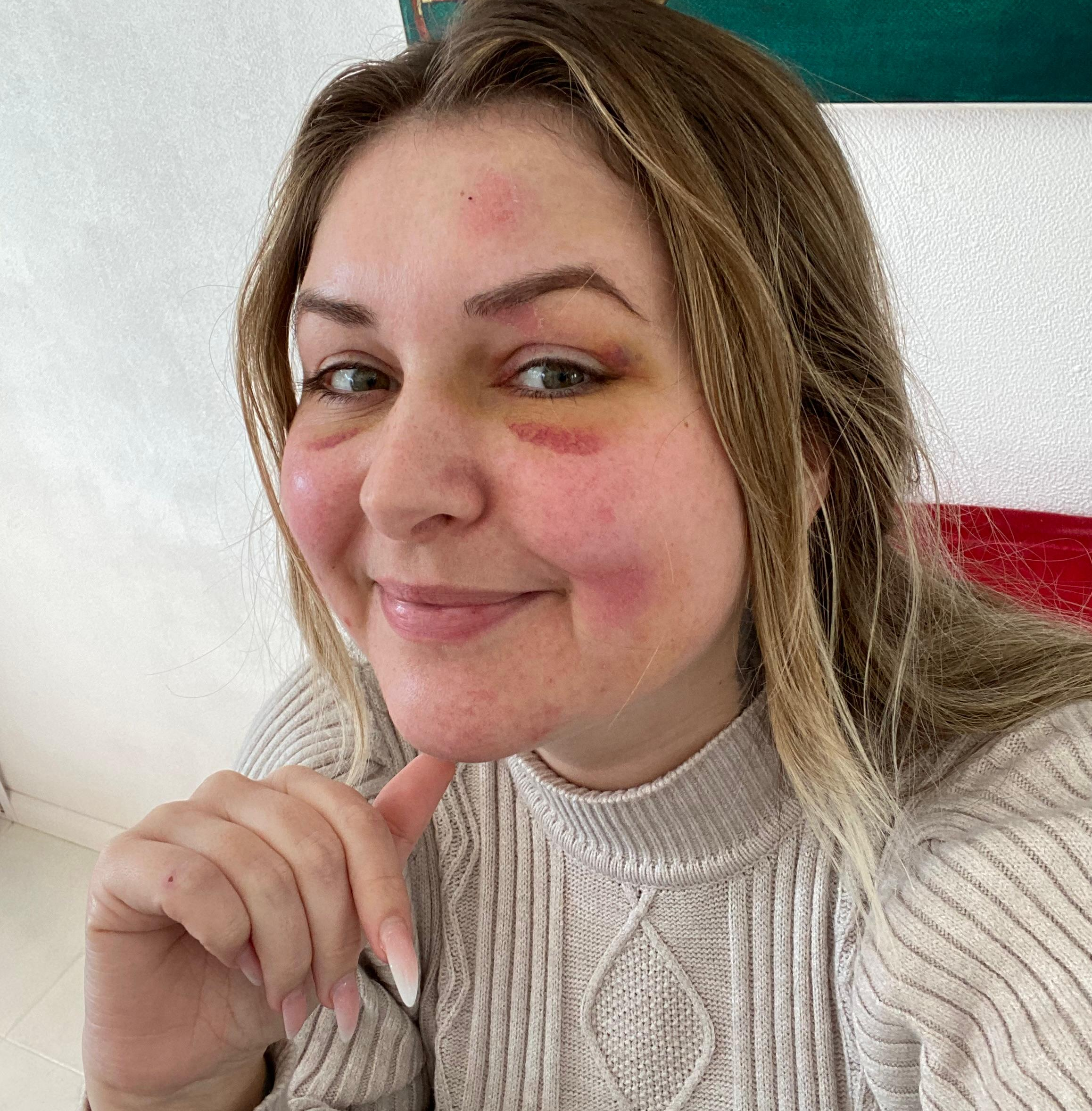
At that time, however, life had just thrown me a rather unexpected curveball. Only a week before her message reached me, on February 27, I had fainted at the top of my staircase and fallen all the way down. I woke up on the floor, disoriented and bleeding, not immediately aware of what had happened. Later, I learned that I had a severe concussion, deep bruising, and several scrapes across my body and face. Miraculously, nothing was broken. The doctors told me that fainting had probably saved me. Because I had lost consciousness before falling, my body had gone completely limp, and that softness had somehow protected me.
It took a few days before the shock truly sank in. I remember sitting on the couch, wrapped in blankets, thinking about how easily things could have gone differently. I was covered in shades of blue and purple, my muscles sore, my energy low, and my mind foggy. And then, a week later, came this invitation to be part of a national tech series. It felt like the universe was telling me that it was a good thing things turned out well, because there was still so much for me to do. So I said yes.
The original filming date was scheduled for March 14, which would have been far too soon, but luckily the crew moved it to March 21, giving me a bit more time to recover. I warned them that I might respond a little slower than usual, and that I would need a generous amount of makeup to hide the bruises, but they couldn’t have been kinder.
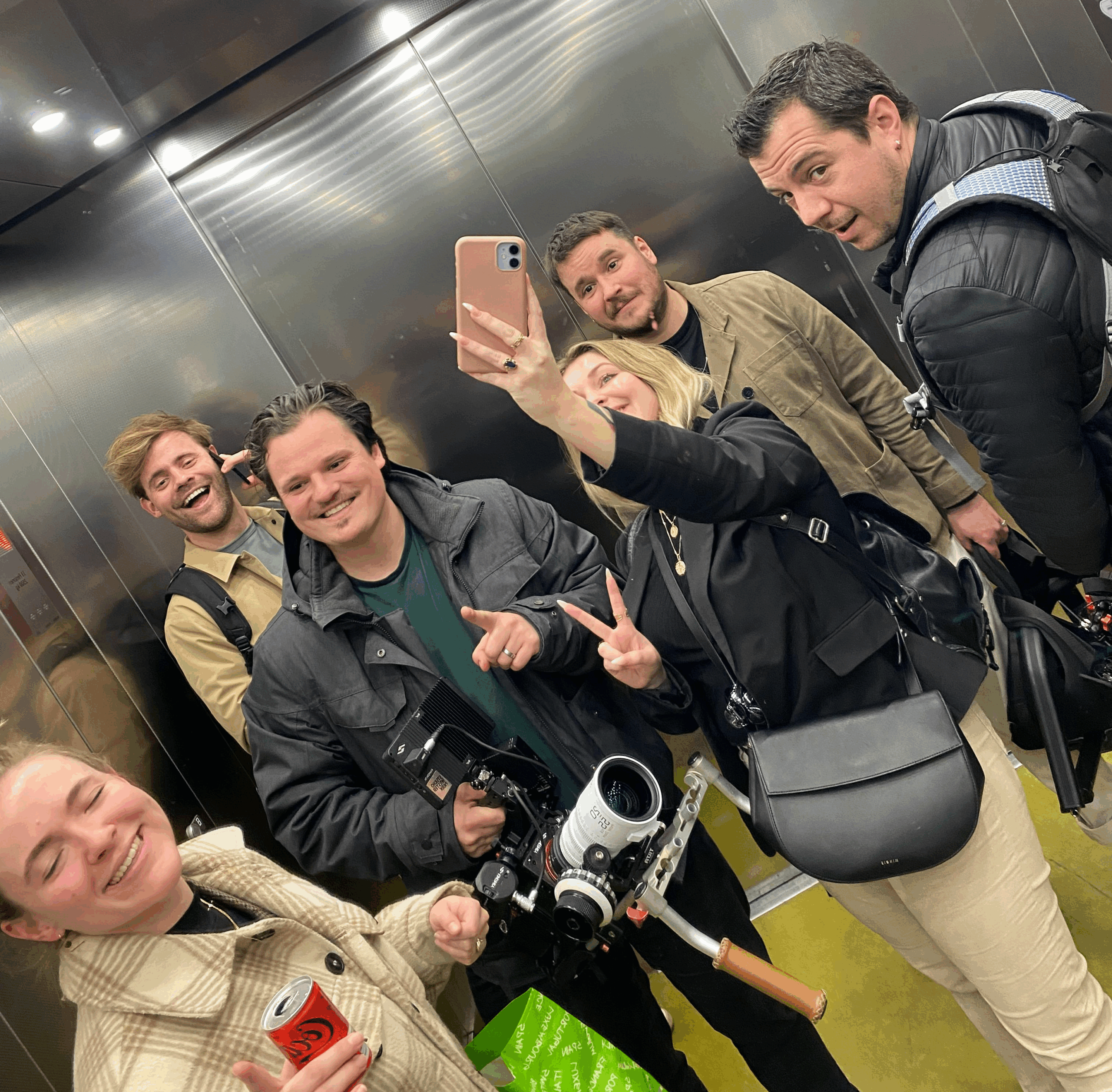
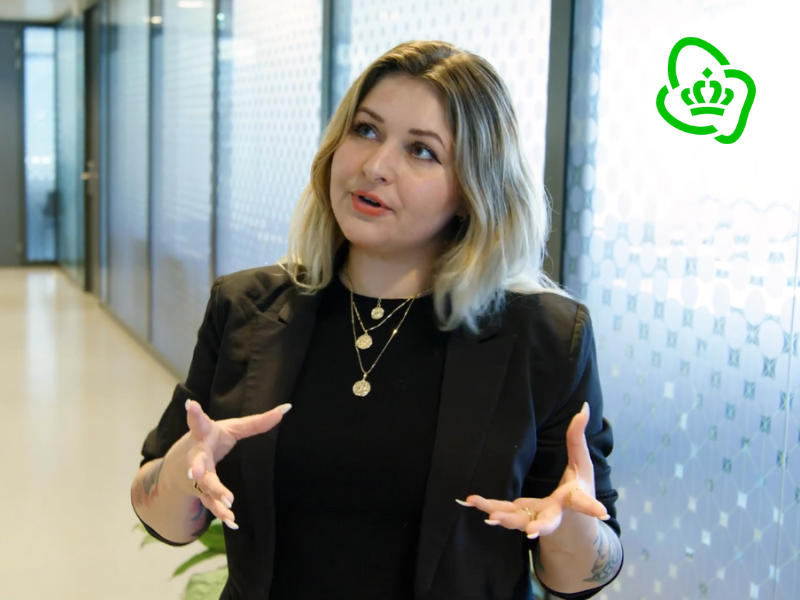
When the shooting day finally came, I felt surprisingly calm. My body was still healing, but I was happy to be there. The production team was warm and relaxed, and from the very first moment, it felt like we were simply having a good conversation. We talked about technology, about how entertainment and gaming are changing, and about the darker sides of running a startup that often get overlooked. Between the serious parts, we laughed a lot.
By the end of the day, I was completely exhausted (my concussion would still take weeks to fully heal) but it was the good kind of tired. The kind that comes after doing something you genuinely enjoy.
Looking back, the timing feels almost poetic. One week I was lying on the floor, realizing there was a chance I might not have a future at all, and only a few weeks later I was standing in front of a camera, talking about futures to come.
I still carry that experience with me, not because of the accident, but because of what came after. It reminded me how fragile and beautiful it is to be alive, and how much meaning can hide in the simple act of saying yes.
While revisiting this project and looking for the video to add to my media archive, the story gained another layer. I came across a statement by KPN. The presenter who interviewed me, Luuk Dresen, had passed away unexpectedly at the young age of 27, only three months after our filming. In agreement with both his family and management, because he was proud of his work and would have wanted it that way, they decided to keep the videos online. (Had that not been the case, I would not have published this entry myself.)
It came as a shock. I remember him vividly. He was bright, kind, endlessly curious, and deeply passionate about his work. We spent that entire afternoon together in front of the camera, exchanging thoughts on technology, creativity, and storytelling. He made everyone around him feel at ease, and I left that day feeling inspired by his energy.
So this post is also a small tribute to him. A reminder of a bright and talented soul who had so much more ahead of him, and who, in that brief afternoon we spent together, left a lasting impression on everyone present.
Transcript(s)
Original Transcript (Dutch)
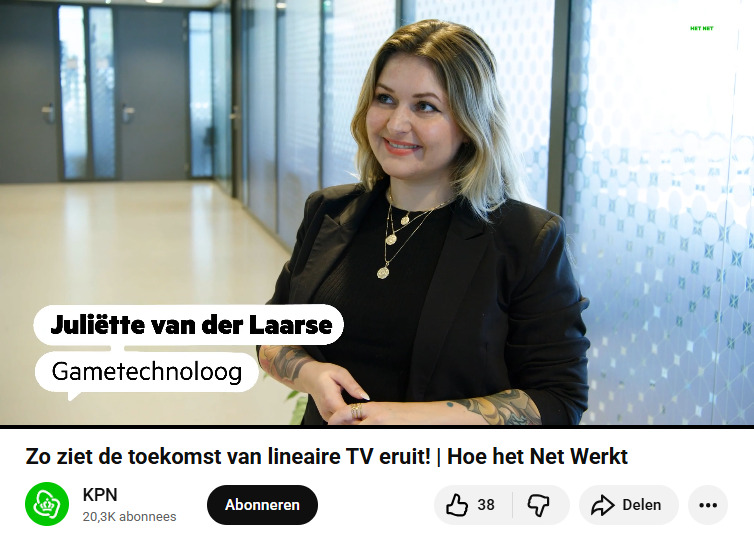
Zo ziet de toekomst van lineaire TV eruit!
Hoe het Net Werkt
[Luuk] Er komt dus een hoop bij kijken voordat we met de afstandsbediening op de bank kunnen ploffen.
Maar dat is hoe we nú video consumeren. Hoe ziet dat er over tien jaar uit?
Zijn we dan alleen maar 360-films aan het kijken of zijn we dan een geworden met onze games?
Gametechnoloog Juliëtte van der Laarse kan ons alles vertellen over de toekomst van ons entertainmentgebruik.
[Luuk] We hebben het tot nu toe over entertainment. Gaming is ook een steeds belangrijkere vorm van entertainment.
Wat voor ontwikkelingen zijn er allemaal geweest in gaming?
[Juliette] Echt ontzettend veel. We hebben natuurlijk steeds meer VR-games. AR begint ook helemaal op te komen.
Wat je gaat zien, is dat die media heel erg verweven raken.
[Luuk] Wat is dan de toekomst van entertainment als games en video steeds meer samenkomen?
Gaan we dan bijvoorbeeld in Fortnite naar de bios, om zomaar iets te zeggen?
[Juliette] Ja, dat zou heel goed kunnen. Dat zie je al heel erg met de opkomst van de metaverse.
Dat mensen echt in die virtuele werelden eigenlijk bijna een parallel leven leiden.
Dus daar kan je natuurlijk met je vrienden ook naar de film. Sommige games doen dat al.
Hoe interactiever de media worden, hoe meer ze ook een sociaal aspect krijgen.
[Luuk] Wat maakt dat die toepassingen nu nog niet mogelijk zijn, dat het nu nog niet werkt?
[Juliette] We hebben niet de bandbreedte om dit te kunnen realiseren.
We hebben nog niet de rekenkracht van de computers om dit te realiseren.
Hoe meer je 3D werkt, hoe meer je druk legt op zowel bandbreedte als rekenkracht.
Er kan al ontzettend veel, maar willen we nu echt de volgende stappen zetten
zodat het echt deel van onze maatschappij wordt, dan hebben we dat echt nodig.
[Luuk] Hoe denk jij dat wij ons vermaken over tien jaar?
[Juliette] Ik denk dat we ons dan veel meer focussen
op het type ervaring dat we willen hebben. Dat we zeggen:
‘Ik wil iets spannends doen of ik wil iets leuks doen.’ En ik denk dat we veel socialer gaan worden.
Want hoe meer we naar virtual en augmented reality kijken
hoe meer we sociale netwerken kunnen opbouwen met mensen aan de andere kant van de wereld.
[Luuk] Juliëtte is hier elke dag mee bezig.
Maar hoe denken mensen op straat dat zij zich vermaken in 2032?
[Passant] Daar moet ik nu gauw over gaan nadenken.
[Passant] Misschien kan je dan wel helemaal virtueel ergens anders zijn.
[Passant] Ik denk dat de hele dag alleen maar draait om ons entertainment.
[Passant] Dat je thuis voor de tv met een bril op zit.
[Passant] Lineair zal minder worden. Ik denk niet dat dat verdwijnt.
[Passant] Dat je er niet meer per se naartoe hoeft, maar dat je het ook kunt projecteren.
[Passant] Ik denk wel met zo’n VR-bril. Niet meer tv. Ik kijk nu al geen tv meer.
[Passant] Als je mee kan spelen in een film. Ja, dat lijkt me wel tof.
[Luuk] Wat het ook precies gaat zijn
dat we bakken met data gaan versturen om ons thuis te kunnen vermaken, staat vast.
Maar met ons glasvezelnetwerk zijn we klaar voor die toekomst.
In de volgende aflevering gaan we kijken wat snel internet kan betekenen voor de zakelijke markt.
Tot dan.
Translated Transcript (English)
This Is What the Future of Linear TV Looks Like
How the Internet Works
[Luuk]
A lot goes on behind the scenes before we can flop down on the couch with the remote control in hand.
But that’s how we consume video now. What will that look like ten years from today?
Will we all be watching 360° films, or will we have merged completely with our games?
Game technologist Juliette van der Laarse can tell us everything about the future of how we’ll experience entertainment.
[Luuk]
So far, we’ve been talking about entertainment in general. Gaming is becoming an increasingly important form of entertainment too.
What kind of developments have we seen in gaming?
[Juliette]
Quite a lot, actually. We’re seeing more and more VR games, and AR is really starting to take off as well.
What we’ll see is that these forms of media will become deeply intertwined.
[Luuk]
So what does the future of entertainment look like, now that games and video are increasingly merging?
Are we all going to the cinema inside Fortnite, so to speak?
[Juliette]
That’s actually very possible. We’re already seeing that with the rise of the metaverse —
people leading almost parallel lives within virtual worlds.
So of course you could go to the movies there with your friends. Some games already make that possible.
The more interactive media becomes, the more it develops a social dimension as well.
[Luuk]
What’s holding these kinds of applications back right now? What makes them not yet possible?
[Juliette]
We simply don’t have the bandwidth to make this happen yet.
Nor do we have the computing power that’s required.
The more you work in 3D, the more pressure you place on both bandwidth and processing power.
There’s already a lot we can do, but if we want to take the next step —
to make it truly part of our everyday lives — we really need those advancements.
[Luuk]
How do you think we’ll entertain ourselves ten years from now?
[Juliette]
I think we’ll focus much more on the type of experience we want to have.
We’ll say things like, “I want to do something exciting” or “I want to do something fun.”
And I think we’ll become much more social.
Because the more we move toward virtual and augmented reality,
the more we’ll be able to build social networks with people on the other side of the world.
[Luuk]
Juliette works on this every day.
But what do people on the street think entertainment will look like in 2032?
[Passerby]
That’s something I’ll have to start thinking about now.
[Passerby]
Maybe we’ll be able to be somewhere completely different, virtually.
[Passerby]
I think our whole day will revolve around entertainment.
[Passerby]
That you’ll be sitting at home in front of the TV with a headset on.
[Passerby]
Linear TV will decrease. I don’t think it will disappear completely.
[Passerby]
That you won’t have to go somewhere physically, but could project it instead.
[Passerby]
Probably with a VR headset. No more traditional TV. I already don’t watch TV anymore.
[Passerby]
If you could take part in a movie yourself — yeah, that would be cool.
[Luuk]
Whatever the future may bring, one thing is certain:
we’ll be sending huge amounts of data to entertain ourselves at home.
But with our fiber-optic network, we’re ready for that future.
In the next episode, we’ll explore what high-speed internet can mean for businesses.
See you then.