Learning How To Learn
As some of you might know, I’ve always been a bit obsessed with learning. Not just in the formal academic sense, but in the curious-about-everything, can’t-stop-myself-from-Googling-random-obscure-topics sense. For me, the world has always felt like a never-ending puzzle of fascinating ideas just waiting to be explored. College was basically a candy store, and I wanted to try everything. At one point, I was following four different bachelor’s programs at the same time (which I do not recommend).
In a society where status and achievement are often front and center, this sometimes led to misunderstandings. People would assume I was chasing a perfect résumé or trying to prove something. Ironically, it often had the opposite effect – my unconventional path would confuse employers more than it impressed them. But the truth is much nerdier: I just love learning. Not as a means to an end, but as a hobby. A compulsion. A lifestyle.
Most of the time, I share what I learn when it’s directly relevant to my work. But behind the scenes, I’ve also deep-dived into topics like 1970s South Korean politics, the physics of molten salt nuclear reactors, Quranic history, the DSM-5, historical calendars, light therapy, classical Chinese oracle bones, combustion engines, ferns, fungi, war theory, and internet law. There’s no grand plan, my brain just latches onto something, and off I go.
Sometimes, that even leads to the strangest and most fun connections – like when I used a game mechanics diagram for balancing in-game economies to analyze flaws in the South Korean voting system. I realize that this sounds a bit unhinged. But if anything, it proves the point: I’m not an ambitious overachiever. I’m just… a little weird. (Which, to be fair, my classmates already figured out back in elementary school.)
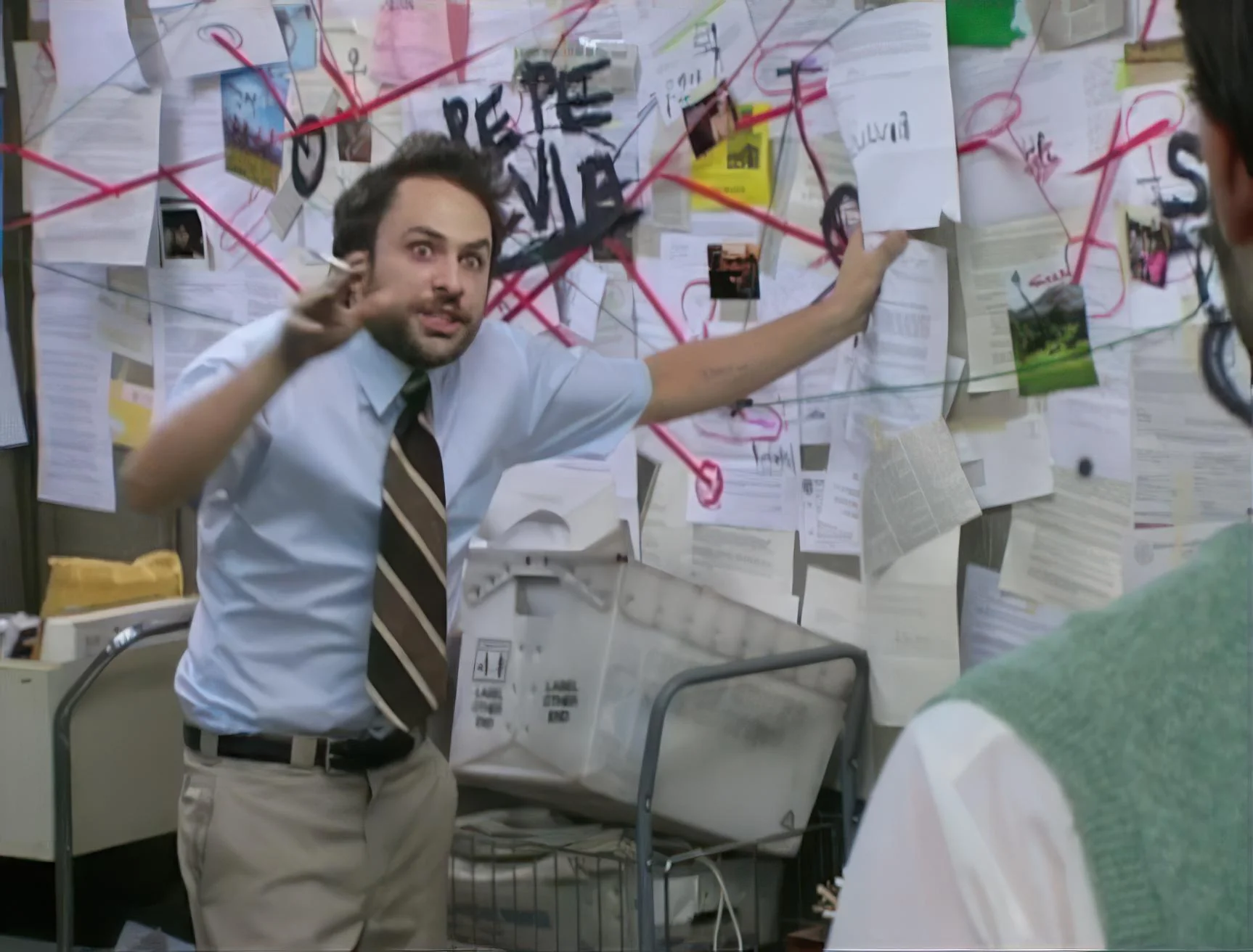
But being this endlessly curious comes with a cost: mental chaos (A meme I often use to describe my brain is the ‘pepe silva’ conspiracy meme). Especially when I want to retain information long-term or actually apply it in my career. Around age 16 or 17, I realized that if I truly wanted to learn this much and not lose my mind, I needed a system. So I did the most predictable thing for someone like me: I started studying how learning works.
Learning to Learn
This blog is part of my Learning to Learn series, where I share how I’ve developed my own methods for autodidactic learning. While my approach is inspired by established didactic theories, I’ve adapted them to fit the way I think and learn. In this series, I share these frameworks and other insights, so that other learners might find inspiration for their own learning journeys.
TL/DR
I have always been fascinated by learning, but without structure everything I studied would fade away again. In high school I realized I needed to learn how to learn, which led me into educational theory and eventually to creating my own system. This post shares how having a personal learning framework can keep curiosity joyful while making knowledge truly stick.

I dove into educational psychology, didactics, cognitive science, and memory research. Once I got access to a university library, I went straight to the original papers. So now, alongside all the topics I was studying for fun or school, I added “learning how to learn” to the mix. And out of that came a system – a personal, evolving method for self-teaching – that I still use to this day.
Recently, I shared this system with someone I manage. She’s in the middle of a learning journey herself, and during a personal development session, I walked her through my method. It helped her organize and pace her learning – and that’s when it hit me: most people want to learn more effectively, but they’re not always sure how. Just like I was when I first started this journey. And unless they’re in a well-designed course with strong didactics, they’re often left to figure it out on their own.
That’s why I decided to write this post. To share my approach! Not as a rulebook, but as a tool. Something to try, tweak, challenge, reshape. Something you can build on.
Because every brain works differently. What worked for me might not work for you, and that’s okay. But I’ll not only walk you through the steps of my method, I’ll also explain the learning theories behind it: like spaced repetition and Bloom’s taxonomy. That way, you can understand why I do what I do, and adapt it to your own needs.
So, whether you’re trying to teach yourself a new skill, juggle multiple study tracks, or just make your learning stick a little better: I hope this helps.
Let’s dive in.